- Vous êtes ici :
-
Accueil

-
Défis
climatiques
- accords internationaux

Déclaration conjointe entre la France et la Chine
par le Ministère français de la Transition écologique et solidaire, le 26 mars 2019
A l’invitation de M. Emmanuel Macron, Président de la République française, M. Xi Jinping, Président de la République populaire de Chine, a effectué du 24 au 26 mars 2019 une visite d’Etat en France. Les deux parties ont passé en revue la situation internationale et les questions globales et régionales d’importance majeure et sont convenus de ce qui suit.
Lire la suite : Déclaration conjointe entre la France et la Chine
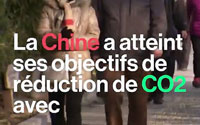
La Chine, le bon élève de la COP 21
par la rédaction de "France.info", le 20 mars 2018
Lors de la COP 21, la Chine s'était engagée à réduire de 45% son intensité carbone d'ici 2020. Un objectif déjà atteint, avec - 46% par rapport au taux de 2005. La Chine, premier pollueur de la planète, a atteint ses objectifs de réduction de CO2 avec 3 ans d'avance.

A propos du nouveau marché national chinois du carbone - Intérêt et limites des allocations « output-based »
Raphaël Trotignon dans "Références économiques pour le développement durable n°36", mars 2018
La Chine a engagé, à la fin de l’année 2017, la mise en place d’un marché national du carbone, dont le champ couvrirait à lui seul plus que l’ensemble des émissions mondiales de CO2 actuellement soumises à un prix du carbone (par le biais de taxes ou de marchés de quotas échangeables). Ce projet retient l’attention à la fois par cet enjeu quantitatif et par le choix du mécanisme d’allocation retenu, dans lequel chaque entreprise reçoit un quota dépendant de son niveau de production courant, établi par référence à des ratios d’émissions sectoriels. Jusqu’à quel point l’acceptabilité facilitée d’un tel mécanisme se paye-t-elle en réduction de son efficacité ?
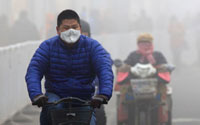
La Chine lance un marché national du carbone
bulletin n°16 de l'ICAP (International Carbon Action Partnership), le 13 février 2018
Par le biais d'une vidéoconférence parue le 19 décembre 2017 et réunissant à la fois les ministères nationaux et les gouvernements provinciaux, la Chine a lancé son ETS (emissions trading system) national, très attendu.
Lire la suite : La Chine lance un marché national du carbone

La Chine lance son projet de marché du carbone
par Joël Cossardeaux, le 19 décembre 2017
Le premier pays émetteur de gaz à effet de serre au monde a dévoilé mardi son projet de marché du carbone. Cette Bourse, qui doit être totalement opérationnelle en 2020, se présente déjà comme la plus importante au monde.
Lire la suite : La Chine lance son projet de marché du carbone

Corporate Disclosure Crucial for National Carbon Market
by the redaction of the Institut of Public and Environmental Affairs, december 2017
Establishing a national, unified carbon emissions trading market is one of the most important measures for China to implement its Paris Agreement commitments. Economic theory and systems theory consider clarity of property rights to be a foundation and a prerequisite for the normal operation of trading markets. Carbon emissions permits can be seen as a virtual asset and a public good. Therefore, disclosing such information as total emissions volume, emissions reductions and reduction measures for enterprises with carbon allowances benefits the defining and clarifying of property rights surrounding such virtual assets. In turn, this makes possible the effective supervision of trading processes to ensure fairness, impartiality and the absence of cheating. On one hand, all of this will reduce the costs of carbon market transactions. At the same time, disclosure can help prevent rent-seeking behavior and give rise to carbon pricing information that optimizes resources allocation.
Lire la suite : Corporate Disclosure Crucial for National Carbon Market
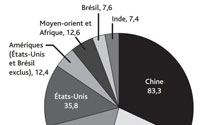
Un espoir de limiter le réchauffement planétaire ? La Chine et l’Accord de Paris sur le changement climatique
par Anthony H. F. Li pour "Perspectives chinoises", le 16 mars 2016
Traduction par Judith Pernin
Le changement climatique est étroitement lié à l’essor de l’économie mondiale depuis la révolution industrielle. Il est scientifiquement prouvé que la concentration croissante de dioxyde de carbone dans l’atmosphère est due aux activités humaines menées depuis la Seconde Guerre mondiale, entraînant un réchauffement climatique, une élévation du niveau de la mer, et des conditions météorologiques extrêmes de plus en plus fréquentes (1).
Page 5 sur 5